Enterprise architecture & technology strategy

280 applications.9 doing the same job.23 cloud subscriptions with no owner.$6.4M renewing this year, on autopilot.

Figures from the EVC demo: a fictional mid-size mining company.

Most organisations can't see this until it's too late. EVC shows you in weeks.

See EVC at work

A short tour of what EVC shows a business, on a fictional company.

What it does for your business

Spend less. Decide better. Move faster.

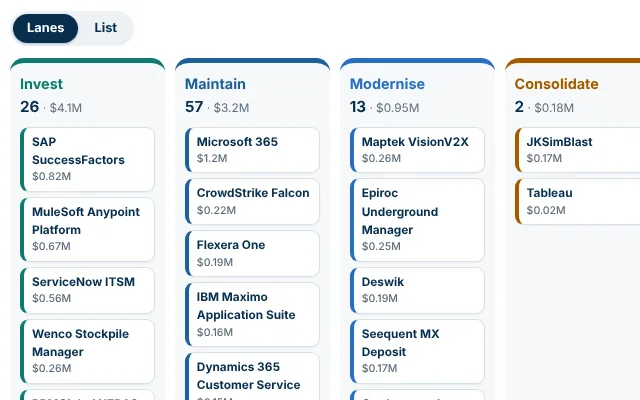
Keep or change board: applications in lanes for modernise, consolidate, replace and retire, each with its run cost a year

Spend less

  • Cut duplicate software spendFinds where several applications do the same job, with a savings range for retiring them.
  • See what each capability costsSpend shown by business capability, so it is challenged by value, not cut blind.
  • Stop paying for software nobody ownsUnowned systems and upcoming renewals flagged before contracts roll over.
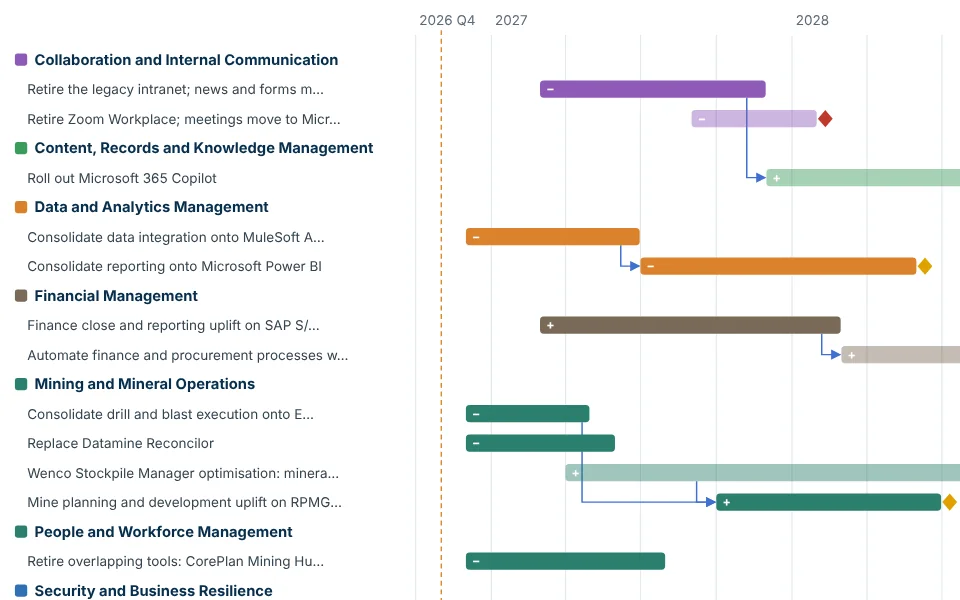
Roadmap of epics by capability domain, with arrows for the dependencies between them

Decide better

  • Risk shown where it mattersUnsupported products and weak systems, against the business function they put at risk.
  • Invest in the right things firstEvery initiative tied to a business objective, costed and sequenced on a roadmap.
  • Savings that stay savedNew purchases go through standards and an architecture review board.
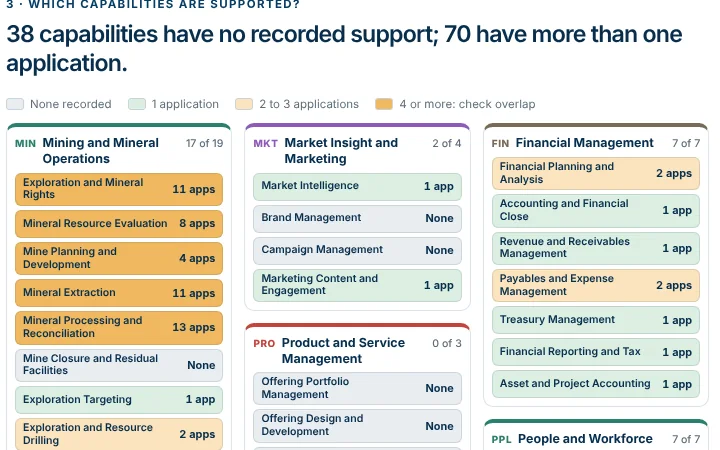
Capability map coloured by how many applications support each capability, with overlaps in orange

Move faster

  • Weeks, not monthsOwners confirm their own facts from a link in minutes, so reviews finish fast.
  • One live recordOne current picture for every budget, renewal and audit, not a spreadsheet that dates on delivery.
  • Ready for mergers and auditsKnow which technology supports each part of the business, and what it costs.

Screens show Tarrabool Resources, a fictional mining company in the EVC demo.

How an engagement works

Four steps from scattered facts to a decision

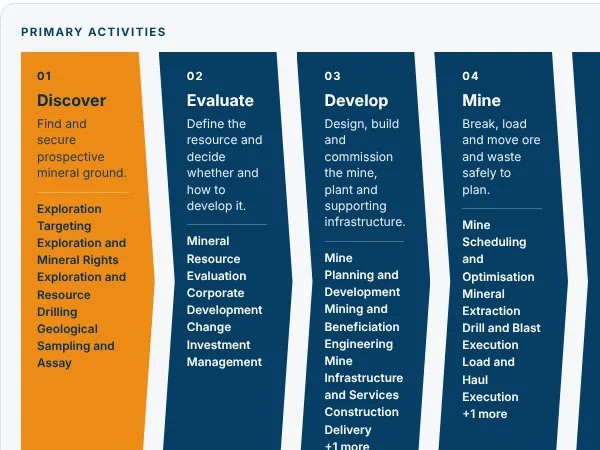
  1. An industry value chain, from discovery to closure, with the capabilities in each stage

    Agree the questions

    A short conversation to set the scope and the decisions the work must support.

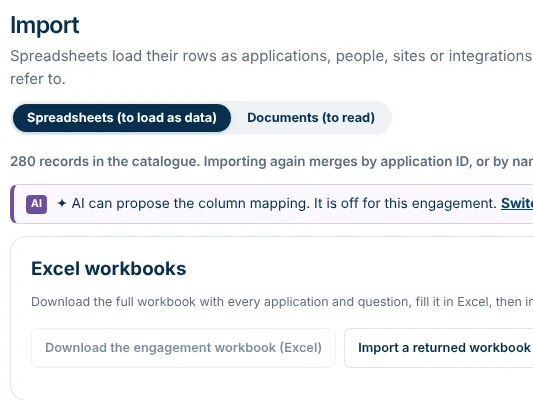
  2. The import screen: load a spreadsheet, CSV or ArchiMate file

    Load what you already have

    Your own extracts and spreadsheets go into EVC, mapped to your business capabilities. No long surveys.

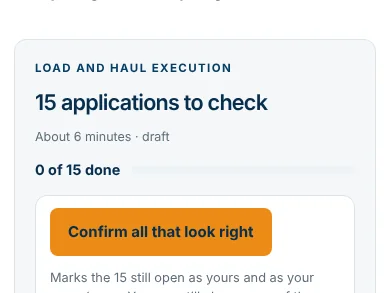
  3. The owner page on a phone: quick questions for each application

    Owners confirm the facts

    Each owner checks their applications from a link in minutes, so the picture is right without chasing.

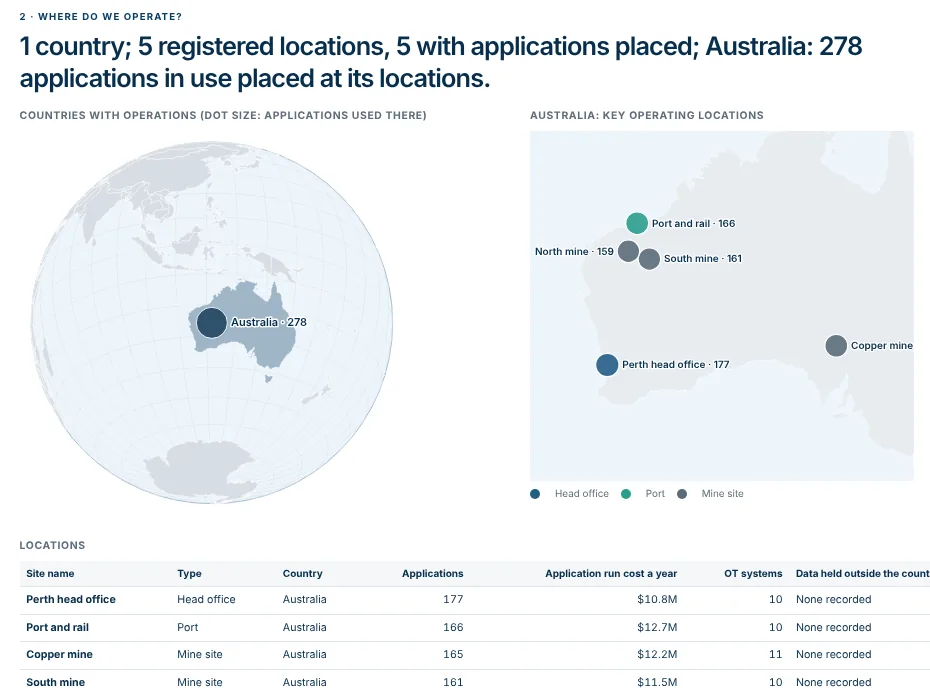
  4. The report in presenter mode, showing countries and operating locations on a globe and a map

    Decide and act

    Costs, risk and options become a costed roadmap and a board-ready report, kept live for the next decision.

Why we built EVC

Strategy is written at the top. Technology is managed at the bottom. The two rarely meet.

In more than 20 years as an enterprise architect, I kept seeing the capability model, application portfolio and roadmap built by hand, every time.

The facts sit in spreadsheets, the people who know them are too busy for surveys, and nobody can say what a capability really costs. EVC is the tool built to fix that.

Let's talk about your portfolio

A short conversation is enough to see whether EVC can pay for itself in your organisation.

Want to try it first? Ask for demo access and we will send you an invitation for 30 days.

Or email info@austrelander.com